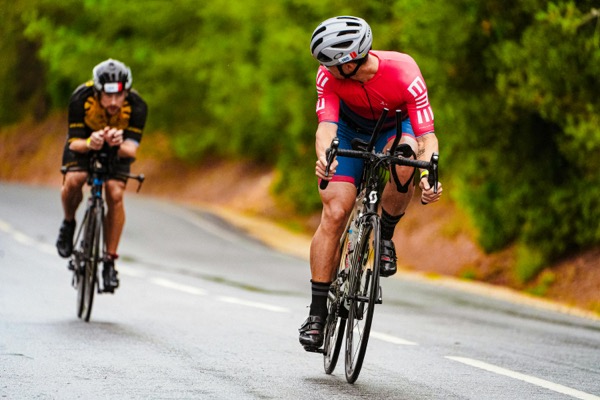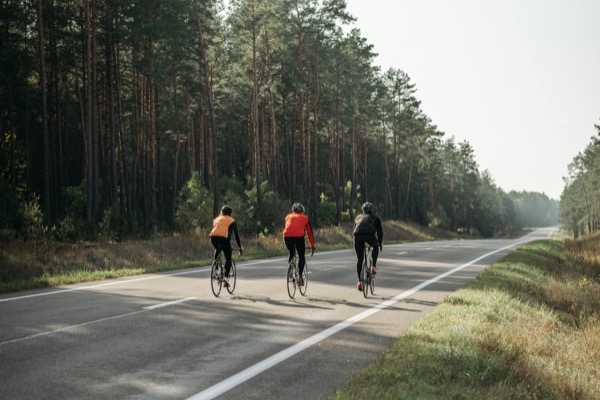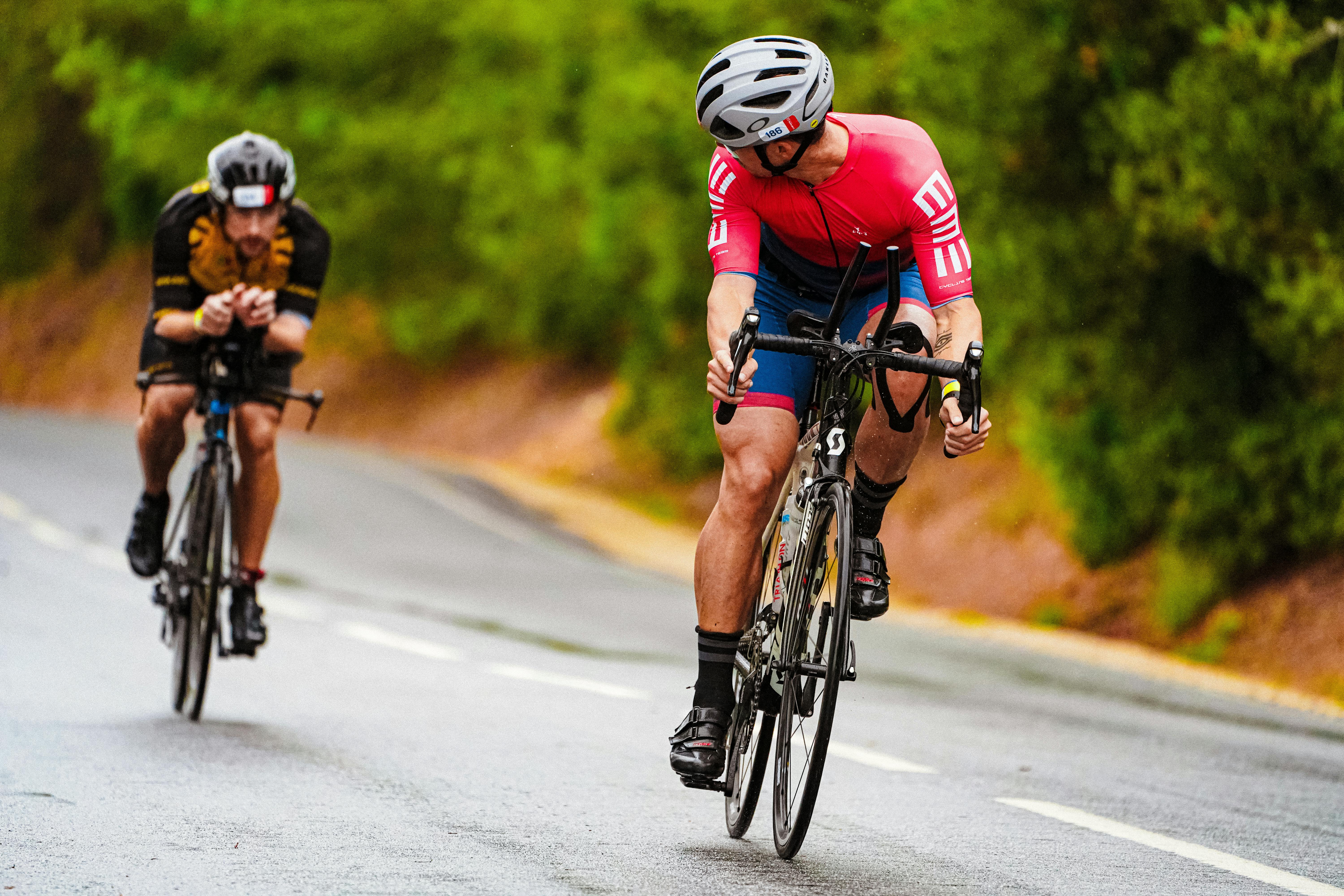
You're 30 miles into a 200-mile ride. Your legs feel fresh, your breathing is easy, and the rider next to you is chatting about last weekend's sportive. You glance at your heart rate monitor: 65% of max. Something feels wrong - shouldn't this be harder?
No. You're doing it exactly right.
The Rule
For ultra-distance rides - anything over 100 miles - the optimal intensity is surprisingly low:
- ~65% of your maximum heart rate
- ~55% of your Functional Threshold Power (FTP)
- RPE 3-4 out of 10 - conversational pace
If it feels too easy in the first few hours, that's about right. The difficulty comes later, and if you've paced correctly, you'll still be riding when others have stopped.
Why So Low? The Science
The Ultraendurance Threshold
A landmark study by Neumayr et al. (2004), published in the British Journal of Sports Medicine, tracked elite cyclists during the Race Across the Alps - a 525 km event through the Austrian mountains [1]. They discovered something crucial:
"The ultraendurance threshold lies at about 70% of HRmax in elite ultramarathon cyclists."
Above this threshold, cardiovascular strain accumulates faster than the body can manage. Heart rate naturally drifts upward over many hours at a fixed effort - a phenomenon called cardiac drift. If you start at 70%, you'll be pushing 75-80% by the afternoon, and that's where things unravel.
Starting at 65% gives you headroom. By hour 10, cardiac drift might push you to 70% at the same power output. You're still below the threshold. You're still riding.
Fat Burning vs Glycogen Burning
This is the metabolic argument, and it's the strongest case for riding easy.
Your body has two main fuel sources: fat (almost unlimited, even in lean athletes) and glycogen (limited to roughly 90-120 minutes of hard effort). The intensity at which you ride determines which fuel dominates.
Research by Achten and Jeukendrup found that peak fat oxidation occurs at 59-62% of VO2max - which maps closely to 65% of max heart rate and 55% of FTP [3]. This zone is called Fatmax.
Above this intensity, carbohydrate becomes the dominant fuel. The difference in glycogen usage is dramatic [4]:
| Intensity | Glycogen usage rate |
|---|---|
| ~43% VO2max (very easy) | 1.0 mmol/kg/min |
| ~61% VO2max (endurance) | 2.0 mmol/kg/min |
| ~91% VO2max (hard) | 4.3 mmol/kg/min |
Riding at tempo (75-85% FTP) burns glycogen at more than double the rate of riding at endurance pace. Over a 12-hour ride, that's the difference between finishing and bonking at mile 150.
Even with optimal fuelling - eating 60-90g of carbs per hour - you can't fully replace glycogen during exercise. You can only slow the drain. At lower intensities, your body draws more energy from fat and the glycogen lasts longer. It's that simple.
Your Gut Needs Blood Too
Here's something riders rarely consider: your stomach needs blood flow to digest food. And during exercise, blood is diverted away from your gut to your working muscles.
At intensities above 70% VO2max, gut blood flow drops by 60-70%. Above 80%, it drops by over 80% [6]. This triggers a cascade:
- You can't absorb the food you're eating
- Undigested food causes nausea, bloating, and GI distress
- Without fuel absorption, you bonk
- You slow down anyway - but now you're depleted AND nauseous
Research shows 30-90% of endurance athletes experience GI problems during events [6]. The primary cause? Riding too hard. At 55-65% of FTP, gut blood flow remains adequate for digestion. You eat, you absorb, you keep riding.
Real-World Numbers
What does this look like in practice? Here's data from published studies on elite ultra-endurance cyclists [2] [1]:
| Event | Duration | Avg Power | Avg HR | Est. IF |
|---|---|---|---|---|
| 24-hour solo record (861 km) | 24h | 210W (2.8 W/kg) | 121 bpm (~65% HRmax) | ~0.55-0.60 |
| RAAM solo | 75.2h | 203W (2.7 W/kg) | - | ~0.55 |
| Race Across the Alps (525 km) | - | - | ~70% HRmax threshold | - |
The 24-hour world record holder - one of the fittest endurance cyclists alive - averaged 65% of max heart rate and roughly 55-60% of FTP. For 24 hours. And his power still dropped 37% over the course of the ride.
If the best in the world rides at these numbers, that tells you everything about what the rest of us should be doing.
What the Coaches Say
Chris Carmichael (CTS): Recommends an Intensity Factor of 0.60-0.65 for ultra-distance events. He notes this intensity "would normally be considered a recovery ride to easy endurance ride intensity for a 1-2 hour ride."
Stephen Seiler (Polarized Training): His research across elite endurance athletes found they spend ~80% of training time below the first ventilatory threshold - 60-72% of max HR [5]. This is the intensity where aerobic adaptations happen and where ultra races are won.
Phil Maffetone (MAF Method): The MAF formula (180 minus your age) targets the aerobic threshold [7]. For a 40-year-old with a max HR of 180, that's a ceiling of 140 bpm - approximately 78% of max HR for training. For racing ultras, staying 10-15 bpm below this is the target.
Dr. Andrew Coggan (Power Zones): Zone 2 (Endurance) is defined as 56-75% of FTP. The lower half of this zone - 56-65% - is where ultra-distance rides belong.
The RPE Test
Don't have a heart rate monitor or power meter? Use the talk test:
- RPE 3/10: You can hold a full conversation. Breathing is steady. You could do this for hours. This is your target.
- RPE 4/10: Slightly more effort. Sentences get shorter but you can still chat. Still OK for the first half.
- RPE 5/10: You can speak but prefer not to. Breathing is noticeable. Too hard for the opening hours of an ultra.
The critical insight: RPE drifts upward naturally. The same 200 watts that feels like RPE 3 in hour one will feel like RPE 5 by hour eight and RPE 7 by hour fourteen. If you start at RPE 5, you'll be at RPE 8-9 by the time things get truly hard - and that's when you stop.
Worked Example: What Do These Numbers Actually Look Like?
Let's make this concrete. Take a typical club rider:
- Weight: 70 kg / 175 cm
- FTP: 265 W (3.8 W/kg)
- Max heart rate: 182 bpm
- Lactate threshold HR: 162 bpm
Here's what the 65% rule gives them:
| Metric | Target | Your number | What it feels like |
|---|---|---|---|
| Heart rate | 65% of max HR | 118 bpm | Barely feels like exercise |
| Power | 55% of FTP | 146 W (2.1 W/kg) | A gentle spin |
| Upper limit HR | 70% of max HR | 127 bpm | Still comfortable |
| Upper limit power | 65% of FTP | 172 W (2.5 W/kg) | Easy endurance |
To put 146 watts in perspective - on a flat road with no wind, that's roughly 28-30 km/h (17-19 mph) for a 70 kg rider. On a typical audax with some hills and wind, your average speed might be 24-26 km/h (15-16 mph). That feels slow. It's supposed to.
Now compare that to what a "normal" ride looks like:
| Ride type | Power | HR | W/kg |
|---|---|---|---|
| Weekend club ride | 185-210 W | 145-155 bpm | 2.6-3.0 |
| Sportive pace | 200-230 W | 150-165 bpm | 2.9-3.3 |
| Ultra target | 146 W | 118 bpm | 2.1 |
The ultra target is 30% lower than a typical club ride. That's the gap that catches people out. You know you can ride at 200 watts, so 146 feels like you're wasting time. But at 200 watts, your glycogen is burning at double the rate, your gut is receiving less blood, and you're accumulating fatigue that will hit you at mile 150.
The Maffetone Check
Phil Maffetone's MAF formula [7] offers another way to sanity-check your target. For our example rider aged 40:
- MAF heart rate: 180 - 40 = 140 bpm
- Ultra target: 118-127 bpm - comfortably below MAF
If your ultra pace puts you above your MAF heart rate, you're almost certainly going too hard for a ride over 100 miles.
What About Hills?
On climbs, let heart rate be your governor, not power. If 65% of max HR means 118 bpm, then climb at whatever power keeps you at 118 bpm - even if that means 100 watts on a steep hill. Your power will spike briefly on short rises and that's fine, but on sustained climbs of 10+ minutes, keep the heart rate in check.
On descents, soft-pedal or coast. This is free recovery. Your heart rate drops, your gut gets more blood flow, and you can eat and drink. Use every descent as a fuelling opportunity.
A Practical Pacing Strategy
Here's how to apply the 65% rule to a 200-mile (320 km) audax:
Hours 1-4: Ride at 60-65% HRmax. It will feel absurdly easy. Riders will pass you. Let them. Eat and drink consistently - this is when your gut works best.
Hours 4-8: Maintain the same power output. Your heart rate will drift up to 65-70% naturally. RPE rises from 3 to 4-5. You're now passing some of the riders who passed you earlier.
Hours 8-12: Power may start to drop 5-10% despite best efforts. Heart rate may plateau or even drop (cardiac fatigue). RPE is now 5-6. You're still eating, still drinking, still moving forward. This is where the discipline of the first four hours pays off.
Hours 12+: Survival mode. But because you paced correctly, you're surviving - not crawling. The riders who went out at 75% FTP are either finished or on a bench somewhere.
What Happens When You Ignore This
The consequences of starting too hard on an ultra ride are well-documented:
- Glycogen depletion (the bonk): Complete exhaustion, cognitive impairment, inability to maintain any meaningful pace. The brain runs almost exclusively on glucose - when glycogen is gone, decision-making and coordination deteriorate.
- GI shutdown: Nausea, vomiting, inability to eat [6]. Once this starts, it's extremely difficult to recover during the ride.
- Muscle damage: Elevated creatine kinase (CK) levels, risk of rhabdomyolysis in extreme cases. Ultra-endurance events show CK levels of 2,400+ U/L - intensity accelerates this [2].
- Immune suppression: Depleted glycogen impairs immune cell function. The "open window" of vulnerability after hard exercise is well-established.
The cruel irony is that going too hard doesn't make you faster over 200 miles. It makes you slower - or it makes you stop.
Planning Your Ultra with PitStopper
Pacing is half the battle. The other half is knowing where to eat, drink, and rest. Upload your GPX route to PitStopper and search for:
- Cafes and shops - plan your fuelling stops every 2-3 hours
- Water points - especially critical in warm weather when hydration demands increase
- Toilets - GI issues are common; know where facilities are
- Accommodation - for multi-day events, plan overnight stops
Export your route with POI waypoints to your GPS so you know exactly where every stop is before you start.
Tip: Use PitStopper's clock time feature to check whether shops and cafes will be open when you arrive. A 4am start means your first cafe stop might not open until 8am - plan your pocket food accordingly.
The Bottom Line
Ultra-distance cycling is not about how hard you can ride. It's about how long you can sustain an effort that feels easy. The science is clear:
- 65% of max heart rate keeps you below the ultraendurance threshold [1]
- 55% of FTP maximises fat oxidation and spares glycogen [3] [4]
- RPE 3-4 leaves headroom for the inevitable drift in perceived effort
The riders who finish 200-mile events strong are not the ones with the highest FTP. They're the ones who had the discipline to ride at 55% of it.
If it feels too easy, you're doing it right.
References
- Neumayr, G. et al. (2004). "Effect of ultramarathon cycling on heart rate in elite cyclists." British Journal of Sports Medicine, 38(1). PMC1724738
- Knechtle, B. et al. (2021). "Racing and Training Physiology of an Elite Ultra-Endurance Cyclist." International Journal of Sports Physiology and Performance, 16(5). PubMed 33547258
- Achten, J. & Jeukendrup, A. (2003). "Maximal fat oxidation during exercise in trained men." International Journal of Sports Medicine. PubMed 14598198
- Vollestad, N.K. & Blom, P.C.S. (1985). "Effect of varying exercise intensity on glycogen depletion in human muscle fibres." Acta Physiologica Scandinavica. PubMed 4083044
- Seiler, S. (2010). "What is best practice for training intensity and duration distribution?" International Journal of Sports Physiology and Performance. PubMed 20861519
- De Oliveira, E.P. et al. (2014). "Gastrointestinal Complaints During Exercise." Sports Medicine. Springer
- Maffetone, P. & Laursen, P.B. (2020). "The 180 Formula: Heart-rate monitoring for healthy exercise." AIMS Public Health. PMC7142223